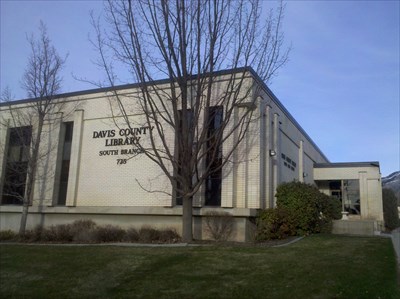
6/4/25 – South Davis Library – Bountiful
Who are the Rhythm Red Devils? We are a community jazz band based in Davis County comprising of both seasoned musicians with over 50 years of big band performance and promising jr. high & high school students. The goal is to allow younger musicians that have a passion for music to experience playing side by side with some of the finest musicians in the community. Due to this mix of experience sometimes you get what can only be described as a train wreck, but this is part of the process too.
Here are your Rhythm Red Devils
Reeds
Doug Bailey – Clarinet/Flute/Alto Sax/Director
Kim Kunz – Alto Sax
Jon Coombs – Flute/Tenor Sax
Jonathan Peterson – Tenor Sax
Matthew Bailey – Baritone Sax
Trumpets
Brandon Tucker
Camden Beckstrand
Jared Beckstrand
Becca Bailey
Trombones
Aaron “Oz” Ozminski
Ryan Kunz
Parker Zollinger
Gabe Sorenson
Rhythm
Nick Moss – Piano/Vocals
Craig Nybo – Bass
Rob Griffin – Guitar
Keith Moon – Drums
Vocals
Dane Anderson
Kori Robbins
Here is the playlist
1 Pure Imagination
- Audio Example:

NOTE: You CAN play along with this example. Midi file from music editing software MusScore - Year: 1971
- Written by: Leslie Bricusse & Anthony Newley
- Arranged by: Connor P. Cummins (adapted for RRD by Doug Bailey)
- Page Number: New
- Book Number: Red Folder
- Beats Per Minute: ♩ = 94
- Key Signature: Eb
- Time Signature: 4/4
- "Pure Imagination" is a song from the 1971 film Willy Wonka & the Chocolate Factory. It was written by British composers Leslie Bricusse and Anthony Newley specifically for the movie.[1] It was sung by Gene Wilder, who played the character of Willy Wonka. Bricusse has stated that the song was written over the phone in one day.[2] The song has a spoken introduction.[3]
2 Shaft
- Audio Example:
NOTE: You CAN play along with this example. - Year: 1971
- Written by: Isaac Hayes
- Arranged by: Keith Mansfield
- Page Number: New
- Book Number: Red Folder
- Beats Per Minute: ♩ = 125
- Key Signature: F
"Theme from Shaft", written and recorded by Isaac Hayes in 1971, is the soul and funk-styled theme song to the Metro-Goldwyn-Mayer film Shaft.[1] The theme was released as a single (shortened and edited from the longer album version) two months after the movie's soundtrack by Stax Records' Enterprise label. "Theme from Shaft" went to number two on the Billboard Soul Singles chart (behind "Inner City Blues (Make Me Wanna Holler)" by Marvin Gaye) and to number one on the Billboard Hot 100[2] in the United States in November 1971, and number one in Canada in December.[3] The song was also well received by adult audiences, reaching number six on Billboard's Easy Listeningchart[4] and number four in Canada.[5] The song is considered by some to be one of the first disco songs.[6][7]
3 Summer Wind
- Audio Example:
NOTE: You CAN play along with this example. May be playable - Year: 1965
- Written by: Heinz Meier
- Page Number: New
- Book Number: Red Folder
- Beats Per Minute: ♩ = 86
- Key Signature: Db
- Time Signature: 4/4
"Summer Wind" is a 1965 song, originally released in Germany as "Der Sommerwind" and written by Heinz Meier and German language lyrics by Hans Bradtke. Johnny Mercer re-wrote the song into English along the same themes as the original, which talked of the changing of the seasons using the Southern European sirocco wind as a metaphor. In America, it was first recorded by Wayne Newton and subsequently by Bobby Vinton and Perry Como. The song is best known for a 1966 recording by Frank Sinatra which peaked at number 25 on the Billboard Hot 100 chart and number one on the Easy Listening chart. The Sinatra version originally appeared on his album, Strangers in the Night. A variety of singers and bands have covered the song since, including Shirley Bassey, Fun Lovin' Criminals, Michael Bublé and James Dean Bradfield. Barry Manilow, Westlife, and Willie Nelson have included the song on their albums of jazz standards.
4 The Stripper
- Year: 1958
- Written by: David Rose
- Arranged by: Johnny Warrington
- Page Number: 82
- Book Number: 1
- Beats Per Minute: ♩ = 105
- Time Signature: 4/4
"The Stripper" is an instrumentalcomposed by David Rose, recorded in 1958 and released four years later. It evinces a jazz influence with especially prominent trombone slides, and evokes the feel of music used to accompany striptease artists.
The tune came to prominence by chance. Rose had recorded "Ebb Tide" as the A-side of a record. His record company, MGM Records, wanted to get it on the market quickly, but discovered there was no B-side available for it. Rose was away at the time the need for the B-side surfaced. An MGM office boy was given the job of going through some of Rose's tapes of unreleased material to find something that would work; he liked "The Stripper" and chose it as the flip side for the record.
5 Fly Me To The Moon
- Audio Example:
NOTE: You CAN play along with this example. - Year: 1954
- Written by: Bart Howard
- Arranged by: Sammy Nestico
- Page Number: 17
- Book Number: 1
- Beats Per Minute: ♩ = 112
- Key Signature: Ab
- Time Signature: 4/4
"Fly Me to the Moon", originally titled "In Other Words", is a song written in 1954 by Bart Howard. The first recording of the song was made in 1954 by Kaye Ballard. Frank Sinatra's1964 version was closely associated with the Apollo missions to the Moon. In 1954, when he began to write the song that became "Fly Me to the Moon", Bart Howard had been pursuing a career in music for over 20 years, Howard wrote the song for his partner of 58 years, Thomas Fowler.[2] He played piano to accompany cabaret singers, but also wrote songs with Cole Porter, his idol, in mind.[3] In response to a publisher's request for a simpler song,[4] Bart Howard wrote a cabaret ballad[5] which he titled "In Other Words". A publisher tried to make him change some words from "fly me to the Moon" to "take me to the Moon," but Howard refused.[6]Many years later Howard commented that "... it took me 20 years to find out how to write a song in 20 minutes."[6] He used his position as a piano accompanist and presenter at the Blue Angel cabaret venue to promote the song,[4] and it was soon introduced in cabaret performances by Felicia Sanders.[3] The song was composed in 3/4 time signature but was changed to 4/ 4 by Quincy Jones in his arrangement.[7][permanent dead link][citation needed]
6 Fancy Pants
- Audio Example:
NOTE: You CAN play along with this example. - Year: 1983
- Written by: Sammy Nestico
- Arranged by: Sammy Nestico
- Page Number: New
- Book Number: Red Folder
- Beats Per Minute: ♩ = 120
- Key Signature: Bb
- Time Signature: 4/4
The title track from the album Fancy Pants is a 1983 studio albumby Count Basie and his orchestra. This is the last recording that Basie made with his big band.[3]
Personnel
- Count Basie - piano
- Dale Carley - trumpet
- Sonny Cohn
- Jim Crawford
- Bob Summers
- Frank Szabo
- Bill Hughes - trombone
- Grover Mitchell
- Dennis Willson
- Mitchell "booty" Wood
- Danny Turner - alto saxophone
- Chris Woods
- Eric Dixon - tenor saxophone
- Kenny Hing
- Johnny Williams - baritone saxophone
- Freddie Green - guitar
- Cleveland Eaton - double bass
- Dennis Mackrel - drums
- Sammy Nestico - arranger, conductor
7 American Patrol
- Audio Example:
NOTE: You CAN play along with this example. - Year: 1942
- Written by: Frank White (F.W.) Meacham
- Arranged by: Ernie Houghton
- Page Number: New
- Book Number: Red Folder
- Beats Per Minute: ♩ = 120
- Time Signature: 4/4
"American Patrol" is a popular march written by Frank White (F.W.) Meacham in 1885. It incorporates both original musical themes by Meacham and melodies from American patriotic songs of the era such as "Columbia, the Gem of the Ocean," "Dixie," and "Yankee Doodle." Composed for piano, it was then arranged for wind band and published by Carl Fischer in 1891. Copyright was assigned to Meacham's widow, Cora, in 1912 and renewed in 1919. The 1885 and 1914 printings for piano do not include "Dixie”. Glenn Miller's Orchestra recorded a swing version of the march arranged by Jerry Gray in 1942 which was released as a 78 single on Victor Records.
8 Killer Joe
- Audio Example:
NOTE: This is an example only! You CAN NOT play along with this.Original Benny Golson recording. Follow the style. - Year: 1960
- Arranged by: Michael Sweeney
- Page Number: 44
- Book Number: 1
- Time Signature: 4/4
"Killer Joe" was first released on the Jazztet's 1960 album titled "Meet the Jazztet." The composition became one of Benny Golson's most well-known and frequently performed pieces. The tune is characterized by its catchy melody and has been embraced by jazz musicians across generations. The Jazztet's recording of "Killer Joe" features a distinctive hard bop sound and showcases the talents of the ensemble's members. Over the years, the composition has been covered by numerous artists and has become a jazz standard in its own right. Its enduring popularity is a testament to Benny Golson's skill as a composer and the timeless appeal of the piece.
9 Embraceable You
- Audio Example:
NOTE: You CAN play along with this example. - Year: 1930
- Written by: George Gershwin
- Arranged by: Dave Wolpe
- Page Number: 23
- Book Number: 1
"Embraceable You" is a jazz standard song with music by George Gershwin and lyrics by Ira Gershwin. The song was written in 1928 for an unpublished operetta named East Is West. It was published in 1930 and included in that year's Broadway musical Girl Crazy, performed by Ginger Rogers in a song and dance routine choreographed by Fred Astaire. Billie Holiday's 1944 recording was inducted into the Grammy Hall of Fame in 2005.[1]
10 Nice 'n' Easy
- Audio Example:
NOTE: You CAN play along with this example. The recording is only partially playable and omits the first 2 measures. - Year: 1960
- Written by: Alan Bergman, Marilyn Bergman** (nee Keith) & Lew Spence
- Page Number: 83
- Book Number: 1
- Beats Per Minute: ♩ = 115
- Time Signature: 4/4
Nice 'n' Easy is the eighteenth studio album by Frank Sinatra, released on July 25, 1960.[3]
All the songs, with the notable exception of the title song, are sung as ballads and were arranged and conducted by Nelson Riddle. The title song was a last-minute substitute for the originally planned "The Nearness of You," which did not appear on the original LP.
The album spent nine weeks at number one on the Billboard stereo album chart, and one week at number one on the corresponding mono album chart.[4] At the 1960 Grammy Awards, Nice 'n' Easy was nominated for the Grammy Award as Album of the Year, Best Male Vocal Performance, Best Arrangement. The song "Nice 'n' Easy" was released as a single in 1960 and made it to number 60 on the charts. It was also recorded by Charlie Rich in 1964, Peggy Lee in 1966, Alex Chilton in 1989, Michael Buble in 2004, Natalie Cole in 2008, and Barbra Streisand in 2011.
Nancy Sinatra recorded a cover version as a single (Reprise Records RS.20756 "Happy" b/w " Nice 'n' Easy"); it is also included in the CD version of her album "Nancy" as a bonus track.
In 2000 it was voted number 545 in Colin Larkin's All Time Top 1000 Albums.[5]
11 C-Jam Blues
- Audio Example:
NOTE: You CAN play along with this example. - Year: 1942
- Written by: Duke Ellington
- Arranged by: Dave Wolpe
- Page Number: 4
- Book Number: 1
- Beats Per Minute: ♩ = 160
- Key Signature: C
- Time Signature: 4/4
"C Jam Blues" is a jazz standard composed in 1942 by Duke Ellington and performed by countless other musicians, such as Dave Grusin, Django Reinhardt, Oscar Peterson, and Charles Mingus. As the title suggests, the piece follows a twelve-bar blues form in the key of C major. The tune is well known for being extremely easy to play, with the entire melody featuring only two notes: G and C. A performance typically features several improvised solos. The melody likely originated from the clarinetist Barney Bigard in 1941, but its origin is not perfectly clear.[1] It was also known as "Duke's Place", with lyrics added by Bill Katts, Bob Thiele and Ruth Roberts.
12 Slow Hot Wind (Lujon)
- Audio Example:
NOTE: You CAN play along with this example. Listen to how softly, yet intensely, this is played. - Year: 1965
- Written by: Henry Mancini
- Arranged by: Joe Reisman
- Page Number: 86
- Book Number: 1
- Beats Per Minute: ♩ = 87
- Key Signature: F
- Time Signature: 4/4
Appeared on his 1961 album Mr. Lucky Goes Latin, but was an original piece of music that had nothing to do with the Mr. Lucky television program.[2] It was included in the soundtracks for the films The Big Lebowski, Sexy Beast, W.E., and Two Lovers. Mancini would later record a jazz/swing version of "Slow Hot Wind" and include it on his 1975 album Symphonic Soul. The song would eventually reach the #38 spot on the Adult Contemporary list in 1976.[3]
13 Beethoven's Fifth
- Audio Example:
NOTE: You CAN play along with this example. Tricky rhythm in the Bari sax and Trombones. Listen carefully! - Year: 1977
- Written by: Beethoven
- Arranged by: Bob Lowden
- Page Number: 85
- Book Number: 1
- Beats Per Minute: ♩ = 96
- Key Signature: Eb
- Time Signature: 4/4
The Symphony No. 5 in C minor of Ludwig van Beethoven, Op. 67, was written between 1804 and 1808. It is one of the best-known compositions in classical music and one of the most frequently played symphonies,[1] and it is widely considered one of the cornerstones of western music. First performed in Vienna's Theater an der Wien in 1808, the work achieved its prodigious reputation soon afterward. E. T. A. Hoffmann described the symphony as "one of the most important works of the time". As is typical of symphonies during the Classical period, Beethoven's Fifth Symphony has four movements. It begins with a distinctive four-note "short-short-short-long" motif: The symphony, and the four-note opening motif in particular, are known worldwide, with the motif appearing frequently in popular culture, from disco versions to rock and roll covers, to uses in film and television. Like Beethoven's Eroica (heroic) and Pastorale (rural), Symphony No. 5 was given an explicit name besides the numbering, though not by Beethoven himself. It became popular under "Schicksals-Sinfonie" (Fate Symphony), and the famous five bar theme was called the "Schicksals-Motiv" (Fate Motif). This name is also used in translations. This version was written by Bob Lowden for jazz big band and is officially the oldest song in our library.
14 Something Stupid
- Audio Example:
NOTE: This is an example only! You CAN NOT play along with this.Different arrangement. Only use as a style & lyrical guide - Year: 1966
- Written by: Carson Parks
- Arranged by: Unknown
- Page Number: 84
- Book Number: 1
- Beats Per Minute: ♩ = 113
- Key Signature: F
- Time Signature: 4/4
"Somethin' Stupid", or "Something Stupid", is a song written by C. Carson Parks. It was originally recorded in 1966 by Parks and his wife Gaile Foote, as Carson and Gaile. A 1967 version by Frank Sinatra and his daughter Nancy Sinatra became a major international hit, reaching number one on both the Billboard Hot 100 chart and the UK Singles Chart.[1] In 2001, a cover version by British vocalist Robbie Williams and Australian actress Nicole Kidman reached number one in the UK Singles Chart.
15 Over The Rainbow
- Audio Example:
NOTE: You CAN play along with this example. - Year: 1939
- Written by: E.Y. Harburg and Harold Arlen
- Arranged by: Dave Wolpe
- Page Number: 2
- Book Number: 1
- Beats Per Minute: ♩ = 65
- Key Signature: Bb
- Time Signature: 4/4
"Over the Rainbow" is a ballad by Harold Arlen with lyrics by Yip Harburg.[1] It was written for the 1939 film The Wizard of Oz, in which it was sung by actress Judy Garland[2] in her starring role as Dorothy Gale.[1] It won the Academy Award for Best Original Song and became Garland's signature song. About five minutes into the film, Dorothy sings the song after failing to get Aunt Em, Uncle Henry, and the farmhands to listen to her story of an unpleasant incident involving her dog, Toto, and the town spinster, Miss Gulch (Margaret Hamilton). Aunt Em tells her to "find yourself a place where you won't get into any trouble". This prompts her to walk off by herself, musing to Toto, "Someplace where there isn't any trouble. Do you suppose there is such a place, Toto? There must be. It's not a place you can get to by a boat, or a train. It's far, far away. Behind the moon, beyond the rain", at which point she begins singing.
16 Cha Cha Cha For Judy
- Audio Example:
NOTE: You CAN play along with this example. They play a repeat at the end that is not in the chart. - Year: 1959
- Written by: Marshall Brown
- Arranged by: Marshall Brown
- Page Number: 53
- Book Number: 1
- Beats Per Minute: ♩ = 120
- Time Signature: 4/4
There is no information on the piece Cha Cha Cha for Judy so the following is about the composer.
About the composer
Brown graduated from New York University with a degree in music.[2] He was a band teacher in New York City schools, and one of his school bands performed at the Newport Jazz Festival in the 1950s.[2] With George Wein, he went to Europe to look for musicians for the International Youth Band.[2] In the late 1950s he started the Newport Youth Band.[2] His students included Eddie Gomez, Duško Gojković, George Gruntz, Albert Mangelsdorff, Jimmy Owens, and Gabor Szabo.[2] He worked with Ruby Braff, Bobby Hackett, Lee Konitz, and Pee Wee Russell.[2]
As leader
- The Ruby Braff-Marshall Brown Sextet (United Artists, 1960)
- Live at the Chi Chi Club (Avalon, 1970)
As sideman
- Count Basie, Basie's Beat (Verve, 1967)
- Beaver Harris, From Rag Time to No Time (360 Records, 1975)
- Lee Konitz, The Lee Konitz Duets (Milestone, 1968)
- Lee Konitz, Peacemeal (Milestone, 1970)
- Pee Wee Russell, New Groove (Columbia, 1963)
- Pee Wee Russell, Ask Me Now! (Impulse!, 1966)
- George Wein, George Wein & the Newport All-Stars (Impulse!, 1963)
17 In The Mood
- Audio Example:
NOTE: You CAN play along with this example. - Year: 1939
- Written by: Joe Garland
- Arranged by: Joe Garland
- Page Number: 1
- Book Number: 1
- Beats Per Minute: ♩ = 162
- Key Signature: Ab
- Time Signature: 4/4
"In the Mood" is a popular big band-era jazz standard recorded by American bandleader Glenn Miller. "In the Mood" is based on the composition "Tar Paper Stomp" by Wingy Manone. The first recording under the name "In the Mood" was released by Edgar Hayes & His Orchestra in 1938. In 1983, the Glenn Miller recording from 1939 was inducted into the Grammy Hall of Fame. In 2004, the recording was inducted into the Library of Congress National Recording Registry which consists of recordings that are "culturally, historically, or aesthetically significant." In 1999, National Public Radio (NPR) included the 1939 Glenn Miller recording in its list of "The 100 most important American musical works of the 20th century".[2][3] Glenn Miller's "In the Mood", with "I Want to Be Happy" on the B-side, became the best-selling swing instrumental.[4][5] https://en.wikipedia.org/wiki/In_the_Mood
18 Moon River (Male Vocal)
- Audio Example:
NOTE: This is an example only! You CAN NOT play along with this.Different key and instrumentation - Year: 1960
- Written by: Johnny Warrington, Johnny Mercer & Henry Mancini
- Page Number: 49
- Book Number: 1
- Beats Per Minute: ♩ = 90
- Key Signature: Eb
- Time Signature: 3/4
"Moon River" is a song composed by Henry Mancini with lyrics by Johnny Mercer. It was originally performed by Audrey Hepburn in the 1961 film Breakfast at Tiffany's, winning an Academy Award for Best Original Song.[1] The song also won the 1962 Grammy Awards for Record of the Year and Song of the Year.[2] In 1999, Mancini's recording was inducted into the Grammy Hall of Fame.[3]
19 Pink Panther
- Audio Example:
NOTE: This is an example only! You CAN NOT play along with this. - Year: 1963
- Written by: Henry Mancini
- Arranged by: Unknown
- Page Number: 5
- Book Number: 1
- Beats Per Minute: ♩ = 110
- Time Signature: 4/4
"The Pink Panther Theme" is a jazz composition by Henry Mancini written as the theme for the 1963 film The Pink Panther and subsequently nominated for the Academy Award for Best Original Score at the 37th Academy Awards but lost to the Sherman Brothers for Mary Poppins. The eponymous cartoon character created for the film's opening credits by David DePatie and Friz Freleng was animated in time to the tune. The tenor saxophone solo was played by Plas Johnson.The tune was included on the film's soundtrack album (originally issued as RCA Victor LPM/LSP-2795) and available as a single (in the United States) in 1964; the single reached the Top 10 on the U.S. Billboard adult contemporary chart and won three Grammy Awards. Various recordings of the composition appeared in the opening credits of all The Pink Panther films except A Shot in the Dark and Inspector Clouseau. It has also been used in theatrical shorts, television cartoons, commercials and other works in which the animated Pink Panther appears. "The Pink Panther Theme", composed in the key of E minor, is unusual for Mancini's extensive use of chromaticism. In his autobiography Did They Mention the Music?, Mancini talked about how he composed the theme music:Overview
[edit]I told [the animators] that I would give them a tempo they could animate to, so that any time there were striking motions, someone getting hit, I could score to it. [The animators] finished the sequence and I looked at it. All the accents in the music were timed to actions on the screen. I had a specific saxophone player in mind—Plas Johnson. I nearly always precast my players and write for them and around them, and Plas had the sound and the style I wanted.[1]
Personnel
[edit]- Plas Johnson – tenor saxophone
- Gene Cipriano, Harry Klee, Ronny Lang, Ted Nash – flute, saxophones
- Frank Beach, Conrad Gozzo, Jack Sheldon, Ray Triscari – trumpets
- Karl DeKarske, Dick Nash, Jimmy Priddy – trombones
- John Halliburton – bass trombone
- Al Hendrickson – guitar
- Larry Bunker, Frank Flynn – vibes and percussion
- Jimmy Rowles – piano
- Rolly Bundock – bass
- Shelly Manne – drums
- Pete Jolly – accordion
- Ramon Rivera – congas, percussion[2]
From 1976 to 1991, the theme served as the think music for Safe Crackers, a pricing game featured on the American game show The Price Is Right. In the 1978 film Revenge of the Pink Panther, the theme—and much of the soundtrack from this entry in the series—drew heavily from the disco sound of the late 1970s. The theme itself was reworked to include a dancier bassline, electric keyboard, and a guitar solo. A similar treatment was given to 1983's Curse of the Pink Panther, where the music featured considerably more synthesized elements. The theme was used in John McLaughlin and Al Di Meola's live version of Chick Corea's "Short Tales of the Black Forest", from the 1981 album Friday Night in San Francisco.[3] In the 1993 film Son of the Pink Panther, the theme was rearranged and performed by Bobby McFerrin in the opening titles, the only version of the theme to be performed in a cappella style. The credits featured the theme in the traditional style, similar to its appearance in Return of the Pink Panther, with an electric keyboard bassline. Actresses Drew Barrymore, Lucy Liu and Cameron Diaz, along with Los Angeles–based entertainers The Pussycat Dolls, danced to the theme in their film Charlie's Angels: Full Throttle (2003). Christophe Beck rearranged the music for various uses in the 2006 reboot and its sequel, The Pink Panther 2—DJ Paul Oakenfold remixed the theme song for the 2006 film. Mancini is given a posthumous credit in the opening titles for the theme. The theme was featured in the film The Life and Death of Peter Sellers (2004). A rearranged guitar version of Henry Mancini's "Pink Panther Theme", composed by David Ricard, was used for the short-lived Pink Panther and Pals series in 2010.Other versions
[edit]
20 Mercy, Mercy, Mercy
- Audio Example:
NOTE: You CAN play along with this example. - Year: 1966
- Written by: Josef Zawanul
- Arranged by: Buddy Rich
- Page Number: 54
- Book Number: 1
- Beats Per Minute: ♩ = 140
- Time Signature: 4/4
"Mercy, Mercy, Mercy" is a jazz song written by Joe Zawinul (lyrics by Gail Fisher) in 1966 for Cannonball Adderley and which appears on his album Mercy, Mercy, Mercy! Live at "The Club". The song is the title track of the album and became a surprise hit in February 1967.[1] "Mercy, Mercy, Mercy" went to #2 on the Soul chart and #11 on the Billboard Hot 100 chart.[2] Original version The original version was performed by: Cannonball Adderley (alto saxophone), Nat Adderley (cornet), Joe Zawinul (piano, electric piano), Victor Gaskin (bass) and Roy McCurdy (drums). The theme of the song is performed by Zawinul on a Wurlitzer electric piano previously used by Ray Charles.[3] Musical analysis The first part of the theme is played twice and is completely made of notes from the major pentatonic scale of the first degree. The tune is in the key of B-flat major and has a 20-bar structure with four distinct sections. The chord progression is mainly made of dominant-seventh chords on the first, fourth and fifth degrees, giving the song a bluesy feeling although it does not follow a typical blues progression. The subdominant (IV) chord in the beginning section emphasizes this bluesy feeling. In the second section, the tonic chord alternates with a second-inversion subdominant chord, creating a parallel to the I-IV-V progression (in which the tonic moves to the subdominant).
BAND MEMBERS: bring your own stand and arrive in time for downbeat at 6:30 PM. Setup will begin as early as 6:00 PM.